

10 Social Media Analytics and Automation Tools Compared for 2026
Updated 25 November 2026 - 12 min read
You sent 400 cold DMs last week and got 31 replies. Which account, which lead list, and which opening line brought them in? Most campaign analytics tools can show you post reach, ad clicks, and engagement. Far fewer can tell you which outreach messages led to a booked call.
That gap is common. A 2026 compilation of industry statistics reports that only 18% of marketers can measure ROI at the campaign level, while 44% of organizations use automated marketing-ROI dashboards, according to Digital Applied's marketing analytics roundup. Teams collect activity. They still can't tie a specific campaign to revenue.
This guide compares 10 campaign analytics tools on reporting scope, pricing entry points, and fit for one job. Pick the tool that answers the question you have.
Check four things before you trial anything.
Data sources: Which accounts, ad platforms, and inboxes it can connect.
Outbound or posts: Whether it tracks messages you send, or only published content and ads.
Export: Whether you can pull the raw rows and rebuild the report yourself.
Price at scale: What the bill does when you add clients or extra accounts.
If you automate Instagram outreach to book sales calls, start with the first tool. The rest are strong for posts, ads, and client decks, and weak for the conversation.
Table of Contents
- 1. Nousify.ai, an AI Powered Instagram Outreach Platform
- 2. Social Status
- 3. Socialinsider
- 4. Sprout Social
- 5. Metricool
- 6. Buffer
- 7. AgencyAnalytics
- 8. DashThis
- 9. Supermetrics
- 10. HubSpot Marketing Hub
- How the social media analytics and automation tools differ on who they serve, pricing entry points, and whether they track outreach results
- Match Campaign Analytics Tools to the Question You Need Answered
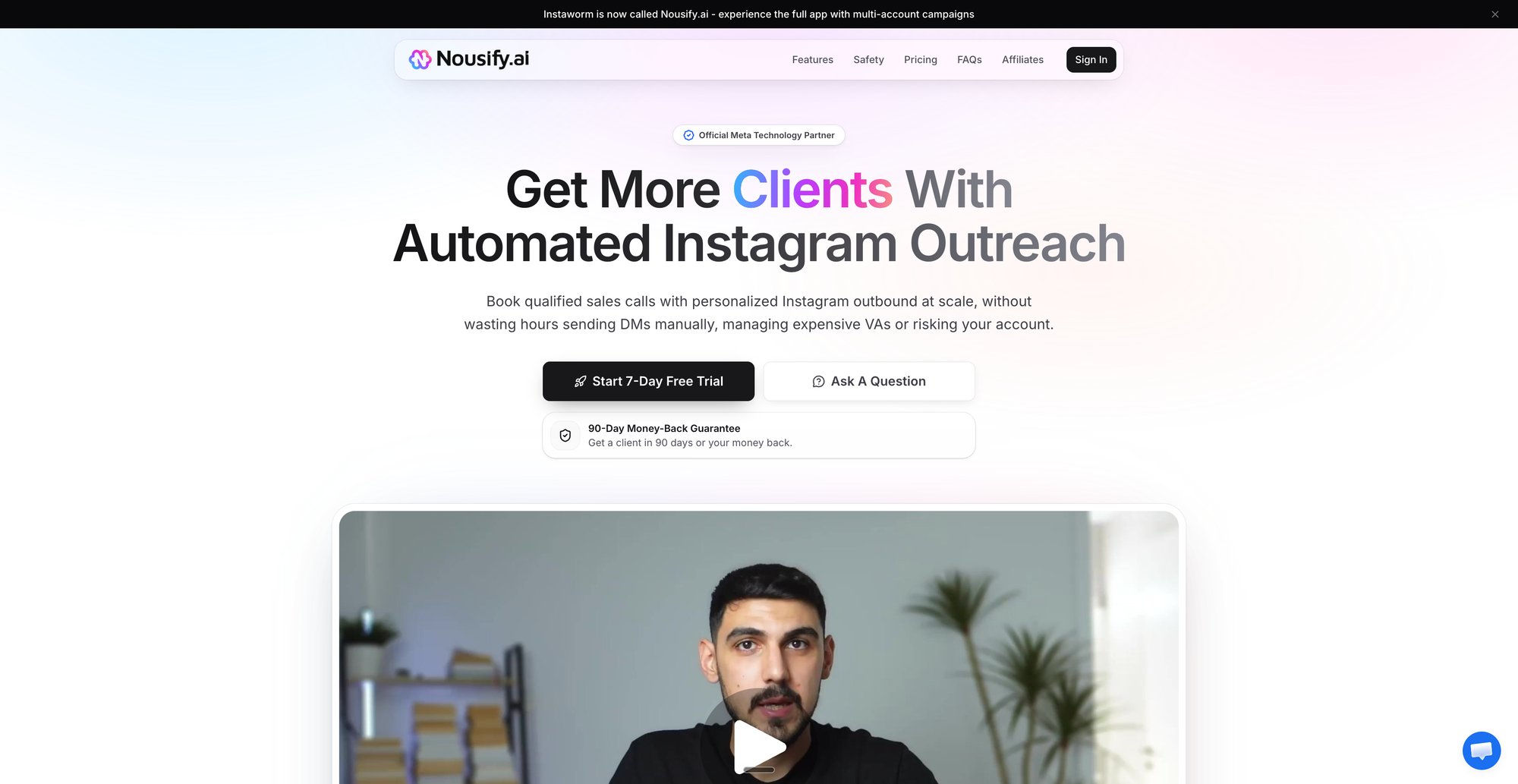
1. Nousify.ai, an AI Powered Instagram Outreach Platform
Social dashboards stop at the post. If your job is Instagram cold DM outreach, you need the conversation and the numbers in one place.
You search for or import leads, including public profile info, then send personalized Instagram DMs from your own logged-in accounts. Each account keeps its own campaigns, inbox, and analytics, so one client's leads don't sit in another client's pipeline. After setup, sending and syncing continue without you clicking send on every message.
The campaign view is where the funnel lives, not a separate reporting login.
What you can actually compare
For each connected account you can see response rates, which lead sources reply, and where a contact sits from first message to closed client. Export the rows when a client wants a spreadsheet. The CRM holds the username, notes, custom fields, and pipeline stage you add.
Replies land in one inbox. AI drafts answers for objections and follow-ups so you're not pasting the same line all afternoon. Outbound still goes out from your browser through the extension. Inbox replies use Meta's official Instagram API. That split matters. When a person messages an Instagram professional account, an app generally has up to 24 hours to respond, and a human-agent exception can extend replies to seven days, as the Instagram Platform overview describes. Tags aren't a pass for promo blasts outside approved uses.
Limits you should plan around
Campaigns run in a Chrome tab, so the computer has to stay on. Warm-up raises a new account over three weeks: 5 messages a day in week 1, 10 in week 2, 20 in week 3, then up to 120 direct messages per account per day. Starter is $99 a month for three accounts, which is 360 cold DMs a day across those accounts, with unlimited lead scraping and unlimited campaigns. A seven-day trial is included. If Instagram stops accepting messages, the campaign pauses and alerts you.
Nothing here means an account can't be restricted. Warm-up, daily caps, and gaps between sends only lower the risk. I wouldn't use this as a comment chatbot. Use it when you need to know which list and which opener booked the call. For a wider look at sending tools, see our guide to Instagram DM automation tools.
2. Social Status
Say a client wants organic reach, paid social, and a competitor slide in one PDF. Social Status is built for that deck, not for a DM sequence.
A free tier makes it easy to look around. Paid plans are listed from $9 a month, and professional plans from $99 a month.
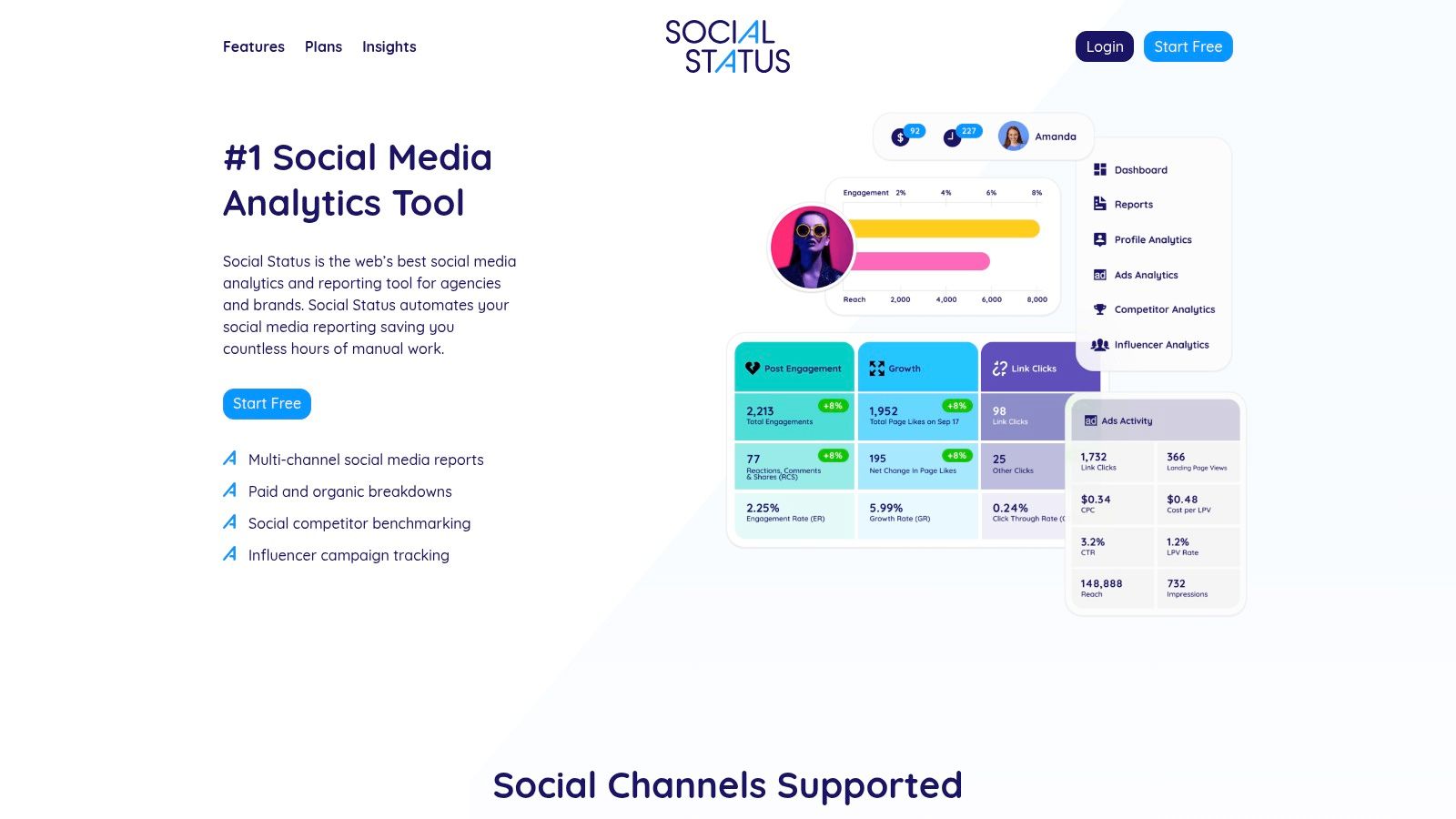
Profile and ad analytics: Owned accounts plus paid social in one report.
Competitor and influencer views: Handy when the ask is a benchmark, not a pipeline.
Exports on eligible plans: PDF, PowerPoint, CSV, and XLSX, plus white-label reports. How far history goes depends on the plan.
Instagram analytics need a professional profile connected to a Facebook Page. Permissions are fairly flat, which gets awkward when two clients shouldn't see each other's profiles. It also doesn't cover non-social channels such as Google Ads.
Practical rule: If the deck is about posts and ads, this fits. If the deck is about replies and calls booked, it doesn't.
3. Socialinsider
Socialinsider is for comparing your social presence with competitors and industry peers, not for running the campaign. Listed plans start at $82 a month on the Adapt tier, and there's a 14-day trial.
You get cross-network performance reports, content-pillar analysis, automated reports, and exports. API access and Looker Studio access show up on some plans or add-ons. Account, history, and seat limits change by tier, and extras can raise the bill.
It's an analytics product, not a publishing suite, and it doesn't connect DM outreach to booked calls or sales. A strong content score can still sit on a list that never qualifies.
Pair the social report with a separate reply benchmark. Content tools don't show positive-reply rate by opening line.
We keep Instagram cold DM reply rate benchmarks for that check, because "engagement is up" doesn't tell you if the sequence is working.
4. Sprout Social
Sprout Social puts publishing, engagement, and measurement in one login. Essentials is listed at $79 per seat per month when billed annually, and a free trial is available.
Reports run at profile and post level across networks. Campaign tags let you group a launch instead of guessing from dates. Paid social, competitor reporting, and listening sit on higher plans or add-ons. Eligible plans export reports and can schedule delivery.
Seat pricing gets expensive once contractors and a second client team need logins. Advanced analytics aren't in the cheap seat, so read the plan before you promise a listening slide.
I like it for a social team that already publishes where they report. I don't like it for an Instagram prospecting funnel. The inbox is for network engagement, not for lead source, qualification, and show rate on cold outreach automation.
5. Metricool
Freelancers who plan the calendar and send a monthly PDF often land here. Metricool has a free plan. Published annual prices start at $20 a month for Starter and $53 a month for Advanced, depending on how many brands you connect.
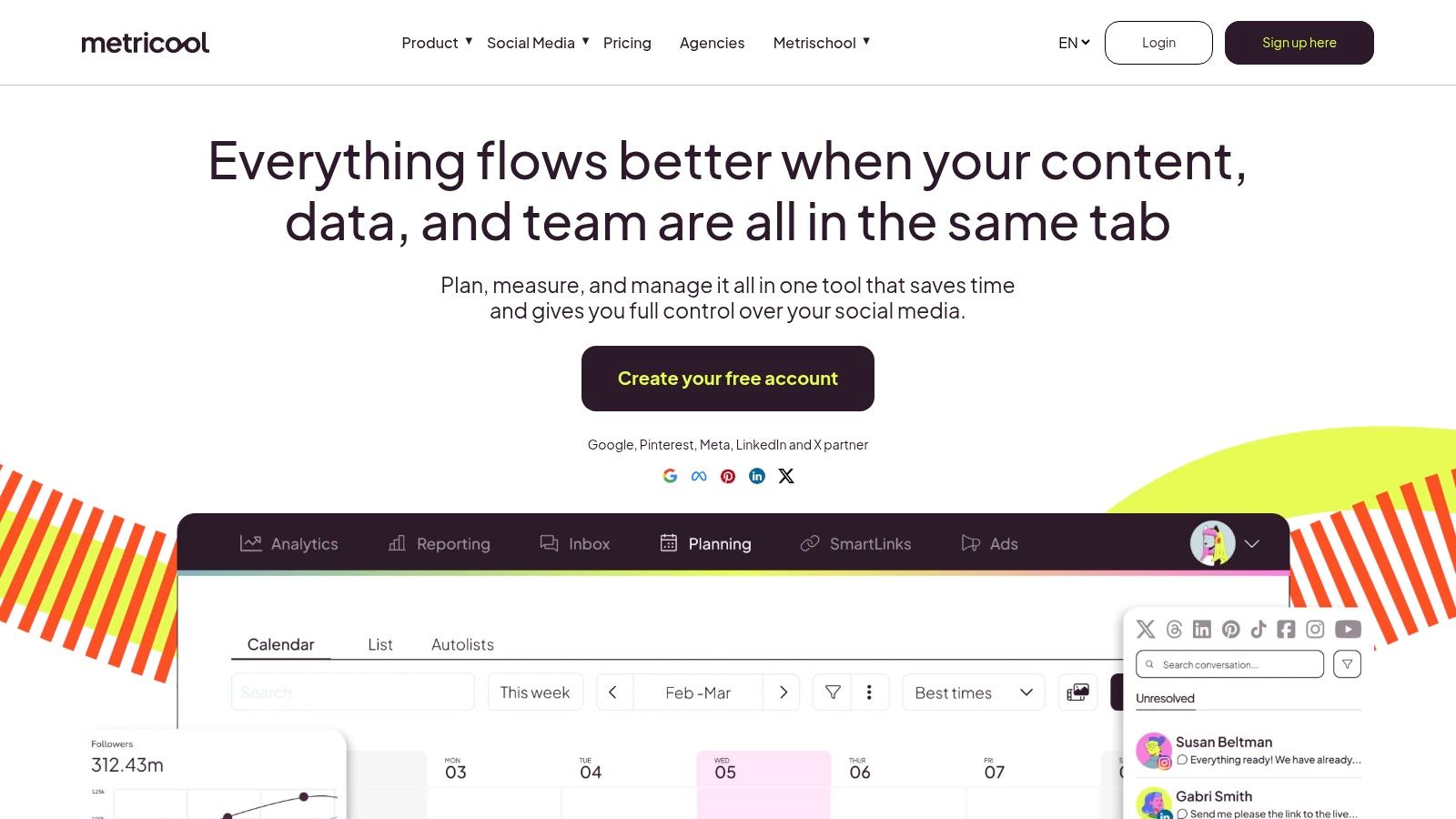
Scheduling, profile analytics, and competitor views sit together. Eligible plans build PDF and PowerPoint reports. Web and paid-ad connections exist, but which ones you get depends on the tier. Agency-style extras tend to cost more.
Check connected-platform limits before you pick a plan. A brand-based meter can suit a small client roster. It still won't show the full outbound path: delivered, replied, qualified, booked. If that path is the report, you're in the wrong product.
Ready To Automate Your Instagram Outreach?
90-Day Money-Back Guarantee
6. Buffer
Buffer is the light option. There's a free plan for up to three channels, and paid plans are priced per channel. That math works when you only run two profiles. It gets clumsy once every client brand is another line item.
You get performance overviews for connected channels, plus scheduling, planning, and simple team workflows. Custom analytics and deeper reports need a paid plan. Available metrics also change by network, so Instagram won't match another channel field for field.
It doesn't connect Instagram conversations to pipeline outcomes such as calls booked or deals won.
If you post a few times a week and want saves and reach, stop here. If you send cold DMs to get clients on Instagram, this report can look fine while the calendar stays empty.
7. AgencyAnalytics
AgencyAnalytics is built for the recurring client report. The listed core plan is $20 per client per month when billed annually, with volume pricing for agencies managing 25 or more clients. You pay for clients, not staff seats. Unlimited staff accounts and reports are included in that core plan.
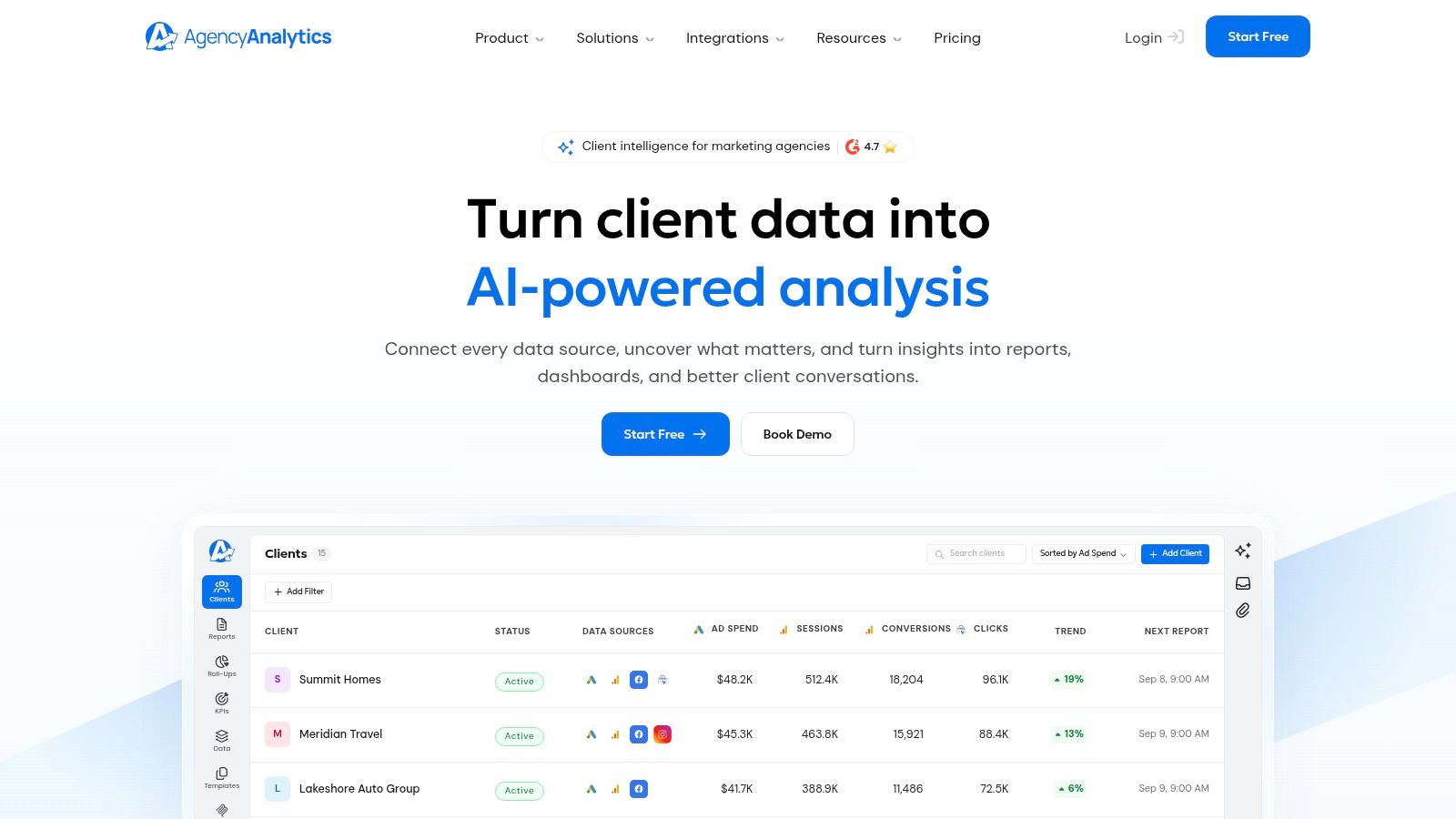
Integrations feed dashboards, scheduled reports, and white-label portals. Goals, alerts, and anomaly detection are there so you're not assembling slides by hand.
Per-client fees add up when you have lots of small accounts. The tool consolidates what you connect. It doesn't replace the source platform, and it doesn't check whether tracking is broken.
A 2025 survey of CMOs in the U.S., UK, Germany, Austria, and Switzerland found that 45% of marketing data used for decisions was incomplete, inaccurate, or outdated, while 43% of respondents believed less than half of their marketing data could be trusted, per Adverity's research release. A clean portal can still repeat a bad number. This isn't a specialist product for Instagram outreach analytics.
8. DashThis
DashThis is a shareable board, not the place you send messages. Annual pricing starts at $44 a month, and a 14-day trial is available.
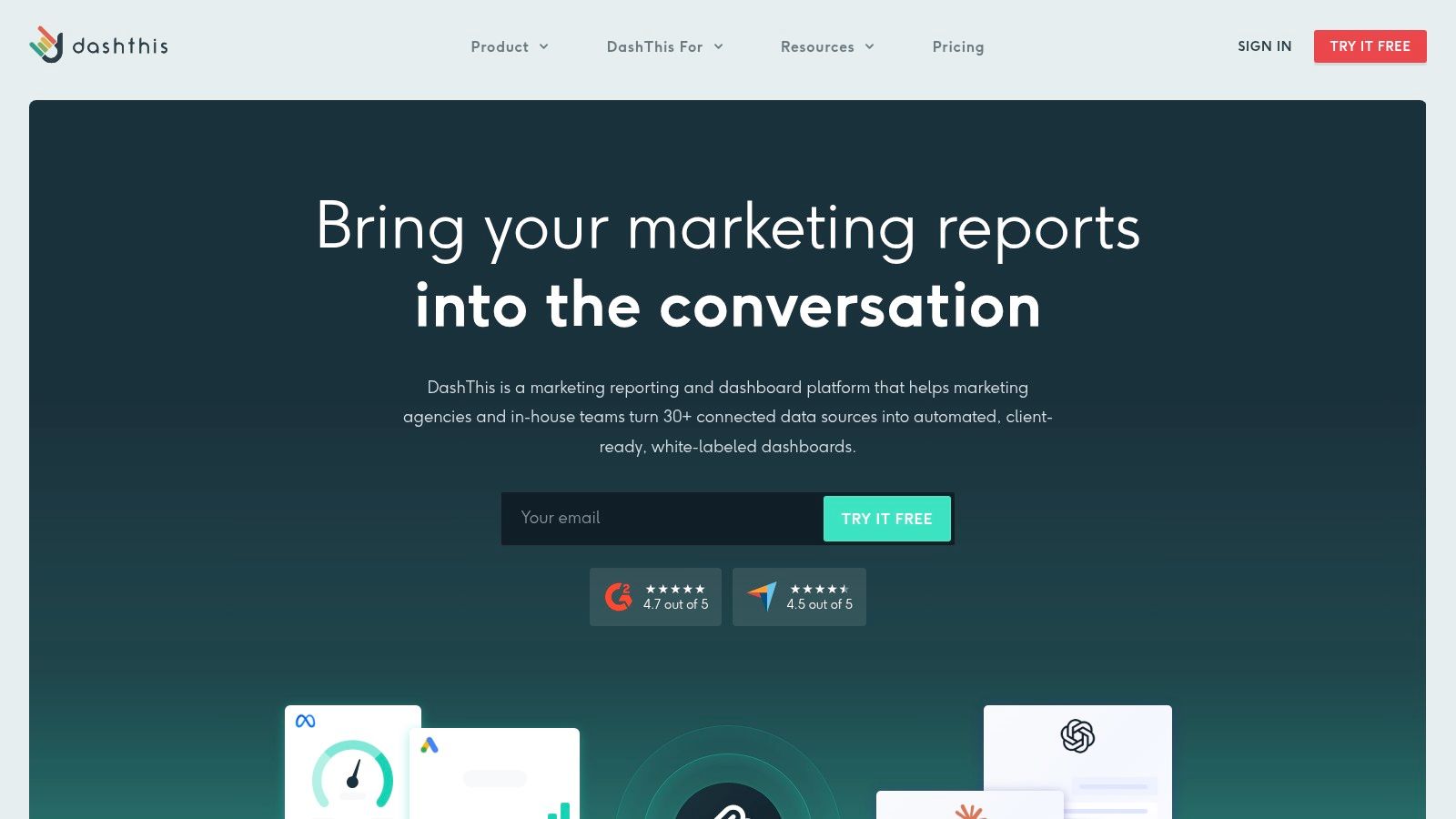
Connectors include Google Analytics 4, Google Ads, Meta, LinkedIn, and SEO tools. Templates refresh on a schedule and can be emailed. You get branded dashboards, custom report URLs, and AI insights in the plans, with deeper AI as an add-on. Unlimited users and integrations are included across listed plans. The cap is dashboards and data sources.
Google Ads help notes that attribution reports expose the paths users take before conversion and can show assisting clicks that last-click misses. A board can chart those paths only if the ad account already records them. Connecting Meta doesn't create a booked-call event. It's a reporting layer, not a CRM and not an outreach tool.
9. Supermetrics
Supermetrics moves data into a tool you already use. It isn't the dashboard. The listed Starter plan begins at $44 a month billed annually, or $55 billed monthly. Price changes with destination, data sources, users, and connected accounts.
Connectors cover social, paid media, web analytics, ecommerce, and other sources. Destinations include spreadsheets, Looker Studio, and Power BI. Current packages can add optional AI analysis.
You own the layout: Useful when an analyst already lives in Sheets.
You maintain the layout: Broken fields and renamed columns are your problem.
The bill moves: Another source, user, or ad account is another charge.
It won't build a CRM or an outreach-to-sales attribution model. I use a connector when the client report already lives in a spreadsheet. I don't use it as the record of who replied.
10. HubSpot Marketing Hub
HubSpot Marketing Hub can tie campaign activity to contacts, deals, and revenue when those events are stored there. A free option covers some tools. Marketing Hub Professional is listed from $800 a month and Enterprise from $3,600 a month, before onboarding fees.
You get campaign reporting, marketing automation, and CRM context in one system. On eligible subscriptions, attribution reports cover contacts created, deals created, and revenue. Google Analytics help defines attribution as assigning credit for a conversion across the ads, clicks, and other touchpoints in a journey. HubSpot can only credit what you captured.
Instagram outbound DMs aren't pulled in by themselves. Someone has to log the lead, the reply, and the booked call, or send them in through an integration. Advanced attribution sits on the higher tiers, and those starting prices are real money for a small coaching offer.
I'd pick it when the sales team already works in HubSpot and the campaigns are email, ads, and forms. I wouldn't make it the only layer for mass DM on Instagram unless pipeline stages get updated every day.
How the social media analytics and automation tools differ on who they serve, pricing entry points, and whether they track outreach results
| Item | Built for | Listed starting price | Free option or trial | Tracks DM outreach outcomes |
|---|---|---|---|---|
| Nousify.ai | Instagram prospecting, outreach, inbox, and CRM | $99/month | 7-day trial | Yes, with funnel metrics including response rates and lead sources |
| Social Status | Social media analytics and reporting | $9/month | Free tier | No, focused on social analytics |
| Socialinsider | Cross-platform social analytics and benchmarking | $82/month | 14-day trial | No, does not connect DMs to sales outcomes |
| Sprout Social | Social publishing, engagement, and analytics | $79/seat/month, billed annually | Free trial | No, not specialized for DM outreach funnels |
| Metricool | Social media planning, publishing, and analytics | $20/month, billed annually | Free plan | No, does not track the full DM sales funnel |
| Buffer | Social publishing, engagement, and analytics | Paid plans priced per channel | Free plan for up to 3 channels | No, does not connect conversations to CRM outcomes |
| AgencyAnalytics | Agency dashboards and client reporting | $20/client/month, billed annually | No trial listed | No, not a specialist outreach analytics tool |
| DashThis | Marketing dashboards and recurring reports | $44/month, billed annually | 14-day trial | No, primarily a reporting layer |
| Supermetrics | Marketing data connections for reporting tools | $44/month, billed annually | No trial listed | No, does not provide a complete outreach attribution model |
| HubSpot Marketing Hub | Marketing campaigns, CRM, and attribution reporting | $800/month for Professional | Free option available | Only when DM activity is recorded or integrated |
Trial terms can vary by plan, so confirm them on each vendor's pricing page. The main difference is what the analytics follow: content performance, connected marketing data, or outreach conversations and their progress through a sales funnel.
Match Campaign Analytics Tools to the Question You Need Answered
Pick by the question first, then by the price.
Posts and profiles. Social Status, Socialinsider, Sprout Social, Metricool, and Buffer tell you what public content did. They're the right buy for a content retainer.
One client dashboard. AgencyAnalytics, DashThis, and Supermetrics compile sources you already pay for. They save reporting hours. They don't send the messages.
Calls from Instagram conversations. You need analytics tied to outreach and the sales pipeline. That's a sender with a CRM, or HubSpot if your team will log every DM by hand.
Before you commit, run a trial on your own numbers. Export one month. Check whether lead source and reply rate are real columns. Rebuild the report without the vendor on the phone. If you can't, the tool is a slideshow.
Two traps stay after you buy.
Attribution isn't causation. A 2025 academic review argues that privacy changes, GDPR, third-party-cookie loss, and reduced browser tracking have weakened traditional attribution, and that incrementality testing estimates actual impact better than one model alone. It also notes that 52.0% of U.S. brand and agency marketers were using incrementality testing or experiments in July 2025, in this EconPapers record. For a small outbound list, keep one slice off the sequence for the same two weeks and compare booked calls, not just replies. If the list is too small for a holdout, compare a prior cohort with the same offer and don't credit automated outreach for demand that was already there.
Access to reporting got cheap years ago. Data36's history of Google Analytics notes the service launched in November 2005 after Google acquired Urchin, whose hosted product had reportedly started at approximately $500 per month, and that the first week created more than 100,000 new accounts. By 2015 it was on roughly 30 million websites. Free dashboards didn't tell you which opener booked the call.
Want to see how outreach analytics work for Instagram? Start a free trial and look at the funnel metrics on your first campaign.
Nousify.ai finds leads, sends personalized cold DMs from your own Instagram accounts, and keeps every reply in one inbox, with AI that can answer and help book sales calls. Campaign analytics sit on that same workflow, so you can compare lead sources, response rates, and funnel stages instead of only post reach. If booked calls are the number you report, visit Nousify.ai.
Ready To Automate Your Instagram Outreach?
90-Day Money-Back Guarantee